DESIGN
TECHNOLOGY
WEBSTACY®
© 2024 – 2026
Bespoke internal platforms, customer portals, and enterprise resource planning systems tailored exactly to your operations.
Get in TouchOff-the-shelf software forces you to change your workflow to fit their template. At Webstacy, we build custom client portals and enterprise operations boards that match your exact workflow, built with premium speed and security.
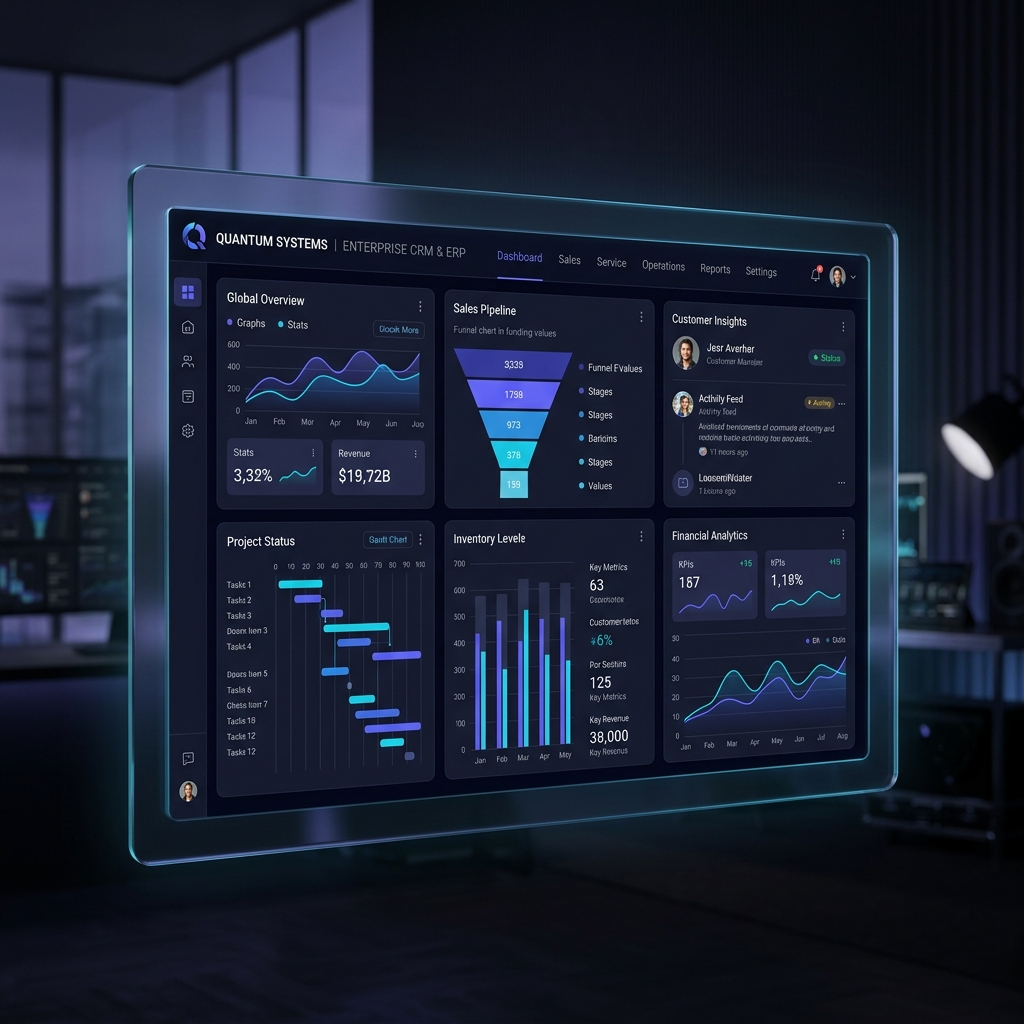
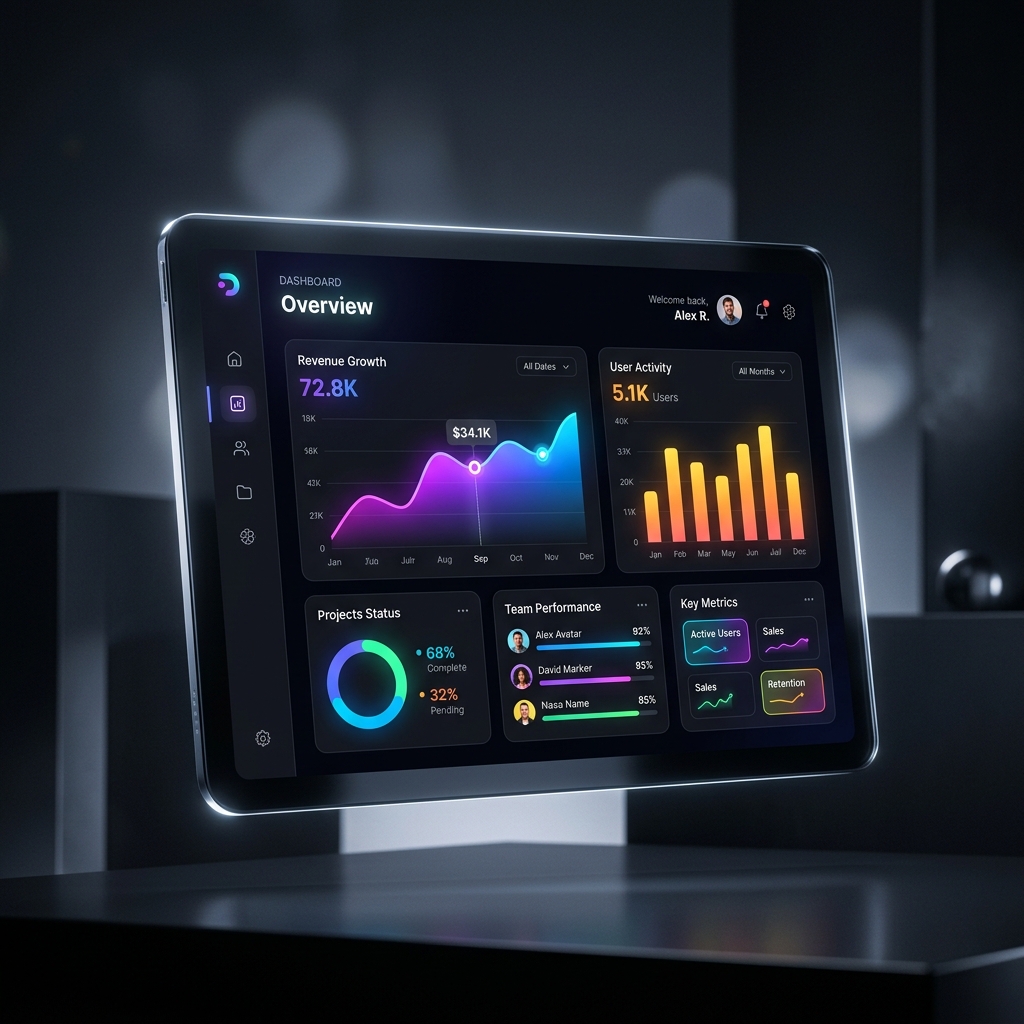
Clean portal spaces that allow customers to manage bookings, documents, or stats seamlessly.
Secure SQL or NoSQL database architectures engineered for speed, search, and scale.
Secure login portals for customers, managers, staff, and admins with custom view rules.
Websockets integration to show instant live order tracking, job queues, or messages.
Documenting your enterprise data models, user roles, and daily workflow tasks.
Design of administrative control boards, tracking views, and customer portal screens.
Setting up scalable data structures, indexes, and cloud APIs.
Adding JWT session management, two-factor auth, and secure SSL connections.
Connecting portal inputs with accounting, scheduling, or communication systems.
Launching platforms on secure VPS clusters and onboarding core personnel.
Every generic CRM or ERP platform is built for the widest possible audience — which means it's optimized for no one specifically. Early on, that trade-off is fine: the software is cheap, fast to set up, and covers the basics. But as operations mature, teams start bending their actual workflow to fit the software's template, paying for modules they don't use, and hitting permission or integration walls the platform was never designed to handle. A custom portal reverses that relationship — the software is built around how your business actually runs, not the other way around.
| Factor | Off-the-Shelf Software | Custom CRM/ERP Portal |
|---|---|---|
| Workflow fit | You adapt to the software's structure | Built around your exact process |
| Pricing model | Per-seat subscription, feature tiers | One build, no per-user licensing |
| Integrations | Limited to available connectors | Direct API integration with any system |
| Data ownership | Hosted on the vendor's infrastructure | Hosted where you choose, fully owned |
| Feature bloat | Paying for modules you'll never use | Only what your operation actually needs |
A custom portal makes sense once a business has outgrown spreadsheets and generic SaaS tools — typically once multiple people need coordinated access to the same live data, or once the process being managed is specific enough that no off-the-shelf tool models it cleanly. It's a strong fit for operations-heavy businesses: equipment rental and fleet management, multi-location service businesses, and any company running processes across several disconnected tools today.
Because you own the codebase and the hosting decision, there's no vendor lock-in and no risk of a third-party platform changing its pricing or shutting down a feature you depend on. Every portal ships with role-based permissions, encrypted sessions, and SSL as a baseline — not a premium tier.
See how this played out in practice for a real operations business in our KSR Earth Movers case study, and read the full technical breakdown in our guide to custom CRM & ERP portal development.
Off-the-shelf tools force your workflow to match their template. A custom portal is built around how your business actually operates — no workaround, no paying for features you don't use.
Yes — every portal ships with role-based permissions, so customers, staff, managers, and admins each only see what's relevant to their login.
Yes — we connect portal data with the accounting, scheduling, or communication systems you already run on.
Portals are built with JWT session management, two-factor auth, and SSL connections as standard, not an add-on.
A custom portal is a one-time build cost instead of an ongoing per-seat subscription — for teams beyond a handful of users, it's often cheaper within 1–2 years, and you're not paying for features you don't use.
Yes — many projects connect a new portal to existing accounting, scheduling, or communication tools rather than replacing everything at once, so the migration can happen in stages.
You get full documentation and a handover session, plus the option to keep us on for ongoing updates and support — there's no lock-in, and the code is yours either way.
Enterprise buyers in Silicon Valley demand flawless performance, ironclad security, and frictionless navigation. Here is how custom Next.js architecture builds multi-million-dollar sales pipelines.
SaaS Portals & SystemsNorth Texas is an enterprise tech powerhouse. Plano, Frisco, and Dallas software companies require robust web architecture and custom customer portals. Here is how Webstacy delivers.
SaaS Portals & SystemsTwin Cities enterprise SaaS and HealthTech software leaders need seamless onboarding and secure client portals. Here is how custom Next.js architecture eliminates churn and accelerates user adoption.
Custom Portals & CRMOff-the-shelf SaaS software charges per-seat license fees while forcing your team into clunky generic workflows. Custom ERP and client portals change the game.
 webstacy