 Get Free Audit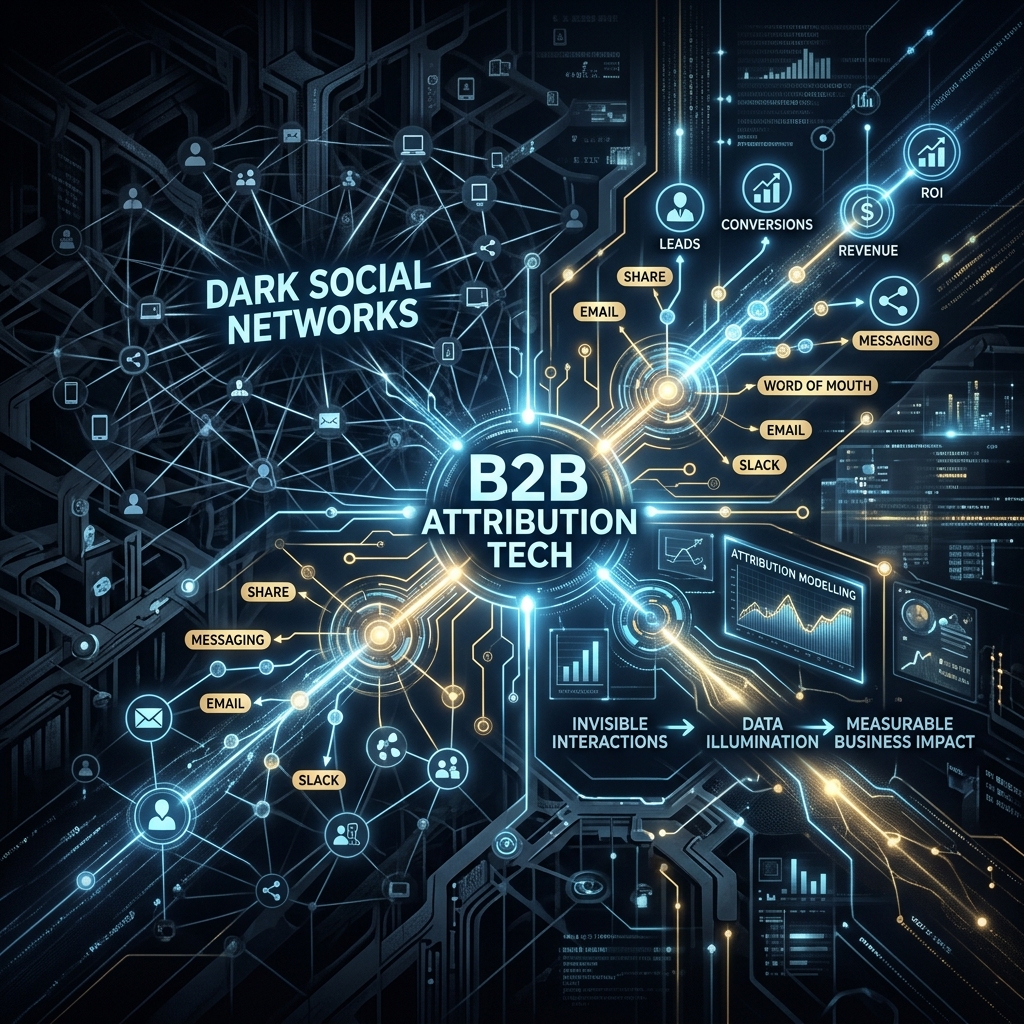
If you ask your marketing operations manager where your best B2B customers come from, they will likely open HubSpot or Google Analytics, point to a dashboard, and say: “Organic Search and Direct Traffic.”
They are wrong.
Your software is telling you how the prospect physically arrived at your website on the day they converted. It is completely blind to why the prospect decided to visit your website in the first place. This massive blind spot is known as Dark Social, and it is where 80% of modern B2B buying decisions are actually made.
The Lie of Software Attribution
Here is how a typical B2B purchase actually happens in 2026:
- A VP of Marketing listens to an industry podcast where your CEO is interviewed.
- The VP shares the podcast link in a private Slack channel with their team.
- Three weeks later, a Director of Marketing remembers the conversation, opens a new browser tab, types your URL directly into the address bar, and fills out a demo request.
What does your $5,000/month attribution software record? It records that lead as “Direct Traffic.”
If you rely solely on software attribution, you will conclude that your podcast strategy generated zero ROI, and you will shift all your budget into SEO because “Direct” and “Organic” look great on the dashboard. You will cut the very channel that is actually driving your revenue.
The Invisible Funnel (Dark Social)
Dark Social encompasses all the channels where buyers consume content and share recommendations natively, without clicking trackable links with UTM parameters.
This includes:
- Private Slack and Discord communities.
- LinkedIn (when users consume content in the feed but don’t click a link).
- Podcasts and YouTube videos.
- Text messages and WhatsApp groups between peers.
- Word of mouth.
These are the most powerful channels in existence because they carry the weight of peer-to-peer trust. But because they strip referral data, attribution software cannot track them.
The Solution: Self-Reported Attribution
The solution to the Dark Social problem is surprisingly low-tech: you just have to ask the buyer.
Implement a mandatory, open-ended text field on your high-intent demo request form that asks: “How did you hear about us?”
Do not use a dropdown menu with pre-selected options (Search, Social, Ads). Dropdowns force buyers into boxes. Use an open-text field.
When you implement this, the answers you receive will shock you. You will stop seeing “Direct Traffic” and start seeing responses like:
- “Sarah from [Company X] mentioned you in the RevenueOps Slack group.”
- “I listened to your CEO on the SaaS metrics podcast last month.”
- “I’ve been following your VP of Sales on LinkedIn for a year.”
Aligning Strategy with Reality
When you understand Dark Social, you realize that demand is created in untrackable places, but captured in trackable ones.
Google Ads and SEO are excellent for capturing demand once the buyer has made a decision. But podcasts, organic LinkedIn content, and community building are what actually create the demand. Stop relying on flawed software to dictate your strategy, and start building brand authority where the buyers actually live.