 Get Free Audit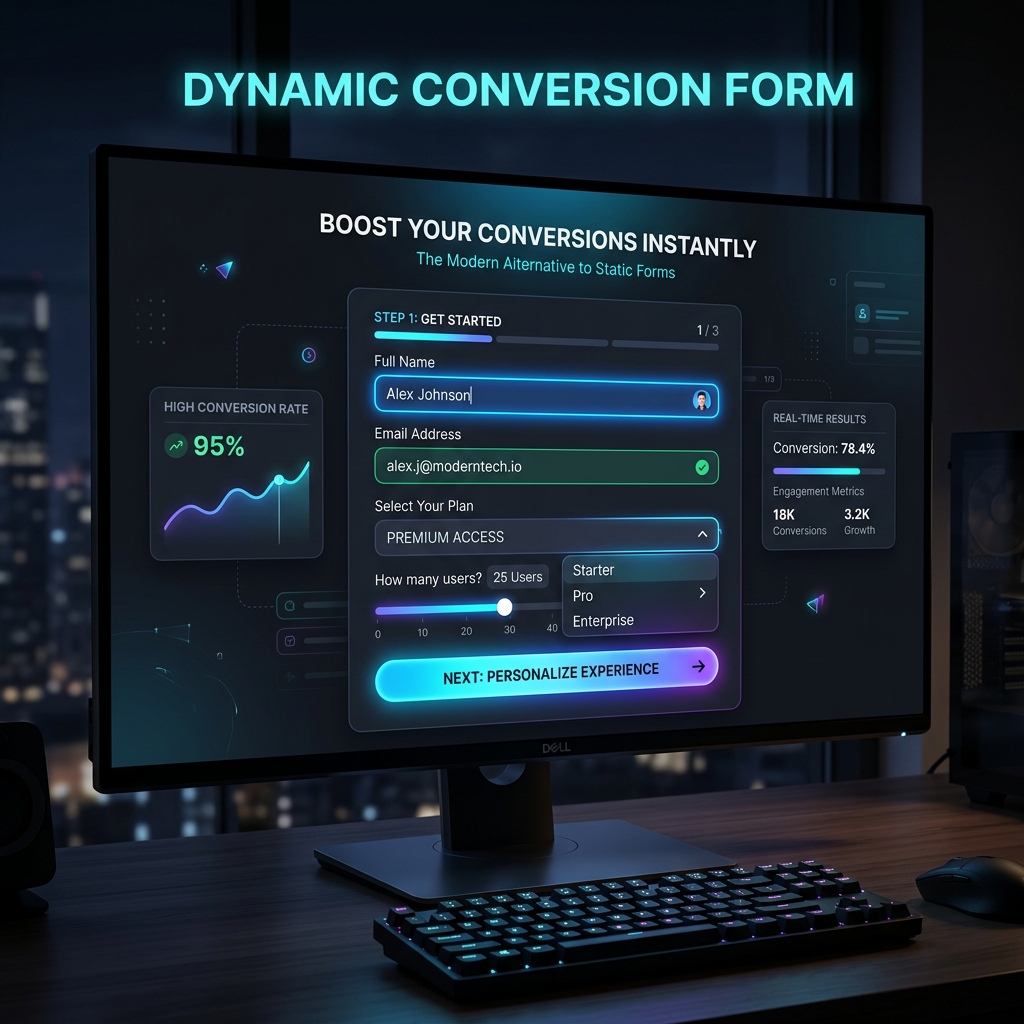
Take a look at the “Contact Us” page on your current B2B website.
Chances are, it features a stark, uninviting form asking for a First Name, Last Name, Email, Phone Number, and a giant, empty text box labeled “Message.”
This format hasn’t changed since 1999. And in today’s high-friction digital landscape, it is actively destroying your pipeline. A static contact form is asking the prospect to do all the heavy lifting. It provides zero immediate value, offers zero context, and provides you, the business, with zero structured data.
It is time to kill the Contact form and replace it with a Dynamic Intake Engine.
The Psychology of Micro-Commitments
When a prospect sees a massive wall of text fields, their brain immediately registers “work.” The cognitive load is too high, and they bounce.
Dynamic intake engines solve this by using the psychological principle of micro-commitments. Instead of displaying ten fields at once, the engine displays a single, frictionless question: “What is your primary goal?”
Once the user clicks an option, they have made a micro-commitment. They are now invested in the process. The engine then seamlessly slides to the next question. Because the user is only processing one data point at a time, completion rates skyrocket—even if you are ultimately asking more questions than your old static form did.
Routing and Qualification via Conditional Logic
The true power of a dynamic engine is its ability to think.
A static form asks everyone the exact same questions. A dynamic engine alters its behavior in real-time based on what the prospect is typing.
Imagine a prospect selects “I need help with Enterprise Software” from the first question. The engine immediately skips the standard questions and routes them to a highly specific path: “How many users are currently on your network?”
If the prospect selects “Under 10 users” (disqualifying them from your enterprise tier), the logic instantly pivots. Instead of sending them to your high-ticket sales team, the final screen says, “Based on your size, our self-serve platform is perfect for you. Click here to start a free trial.”
If they select “Over 500 users,” the system recognizes a massive opportunity. The final screen bypasses the standard “Thank you” message and directly embeds the calendar of your VP of Enterprise Sales.
Structured Data vs. Unstructured Mess
When prospects dump a paragraph into a “Message” text box, your CRM receives a block of unstructured text. You cannot run reports on it. You cannot trigger automations based on it. A human must read it, interpret it, and manually tag the CRM record.
Dynamic intake engines force the prospect to categorize their needs through specific, structured data points (dropdowns, multiple choice, budget sliders).
This structured data flows flawlessly into Salesforce or HubSpot. It automatically updates custom properties. It automatically triggers the exact right email sequence. It allows your marketing team to run precise reports on exactly what products are driving the most inquiries.
The First Impression of Competence
Your website is often the first interaction a multi-million dollar account has with your brand.
A static, broken, 1999-era contact form screams “outdated.” A sleek, interactive, lightning-fast dynamic intake engine screams competence, organization, and technological superiority.
Upgrading your intake process isn’t just about data; it’s about projecting the authority that enterprise buyers demand.