Get Free Audit
Web Engineering

SEO-Friendly Website Design: Best Practices for 2026

Discover how to build and launch an SEO-friendly website design. Learn best practices for architecture, HTML structure, image optimization, and page speed.

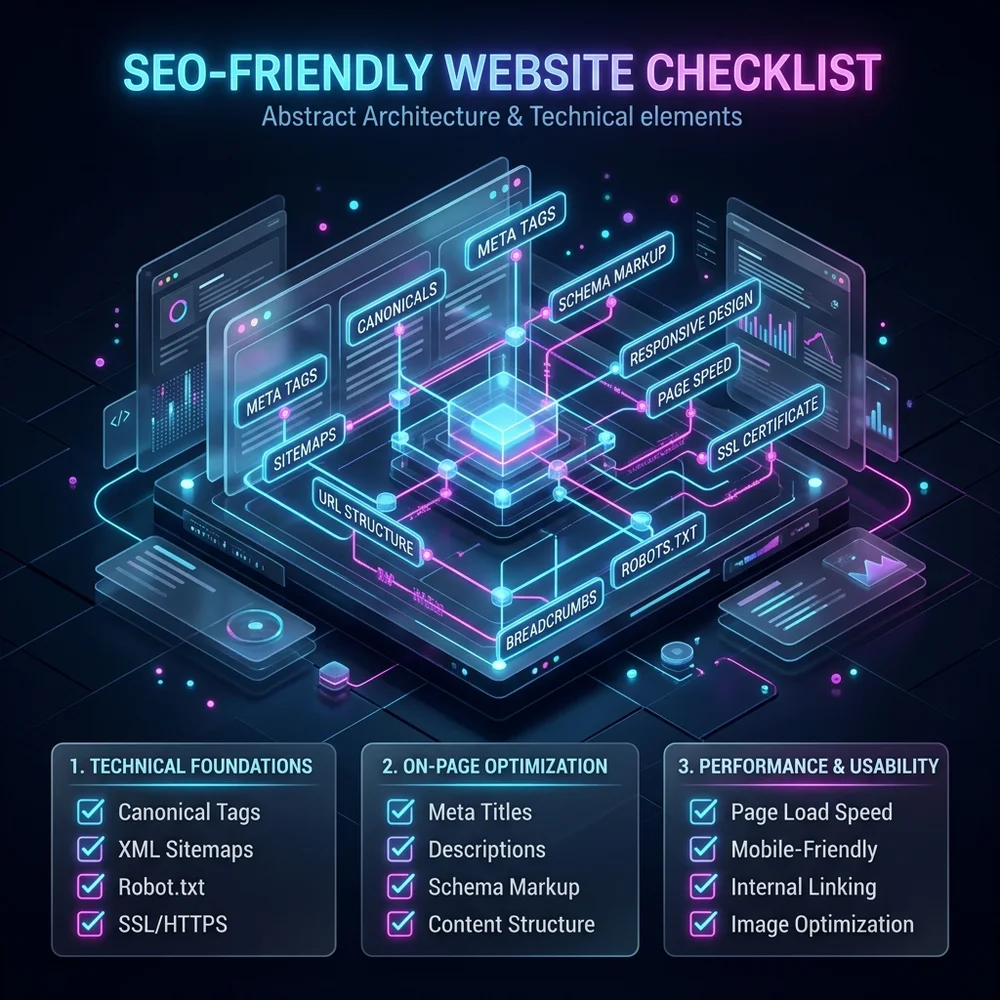
SEO-Friendly Website Design: Best Practices for 2026 visual asset hero image
5.3x Higher organic impressions with clean schema code
Get Free Consultation
🕒 9 min read 📅 Published June 10, 2026

Why SEO and Web Design are Inseparable

Web design and search engine optimization are two sides of the same coin. A website is a machine built to attract and convert visitors. If your site code is bloated, hard to crawl, or slow, search engines will not rank it—no matter how stunning your custom graphics look.

Optimizing why seo and web design are inseparable is vital for digital growth. We recommend linking all forms directly to CRM autoresponder sequences. This leads directly to higher conversion rates and customer trust. By removing visual clutter, you build long-term reader trust.

Conversely, a page that ranks #1 on Google but features an outdated, hard-to-use interface will see visitors bounce immediately. True **SEO-friendly website design** bridges this gap, delivering high search visibility and premium user engagement.

Key Optimization Tactic

Focus on user experience first. Include structured data schema markup to help Google display rich snippets. Consequently, site conversion rates will compound and index scores will improve.

5.3xHigher organic impressions with clean schema code
94%First impressions that depend on visual design quality

Implement Clean, Semantic HTML5 Structures

Search engine spiders read code, not layout colors. Using proper semantic HTML tags (like `

`, `

Frequently Asked Questions

What is an SEO-friendly website?

An SEO-friendly website is designed and coded in a way that allows search engines like Google to crawl, understand, and index its pages efficiently, leading to higher rankings in organic search results.

How does web design affect SEO?

Web design affects SEO in multiple ways: page speed (Core Web Vitals), mobile responsiveness, text legibility, HTML hierarchy, URL structure, and visual layout stability all directly influence search rankings.

Is custom code better for SEO than builders?

Yes. Custom code uses lean, semantic HTML and CSS, resulting in significantly faster loading times. Page builders often inject excessive JavaScript bloat and nested tags, which confuse search crawlers and slow down page performance.

How does this impact search engine visibility?

By targeting high-volume terms and structuring pages correctly, you ensure search engines index your site for target keywords.

Why should we avoid generic templates for this?

Generic templates introduce bloat and slow down page speed, which directly harms your search ranking and user experience.

What is the expected timeline to see results?

Most websites see indexing updates within 2-4 weeks, with compounding organic traffic growth continuing over 3-6 months.