 Get Free Audit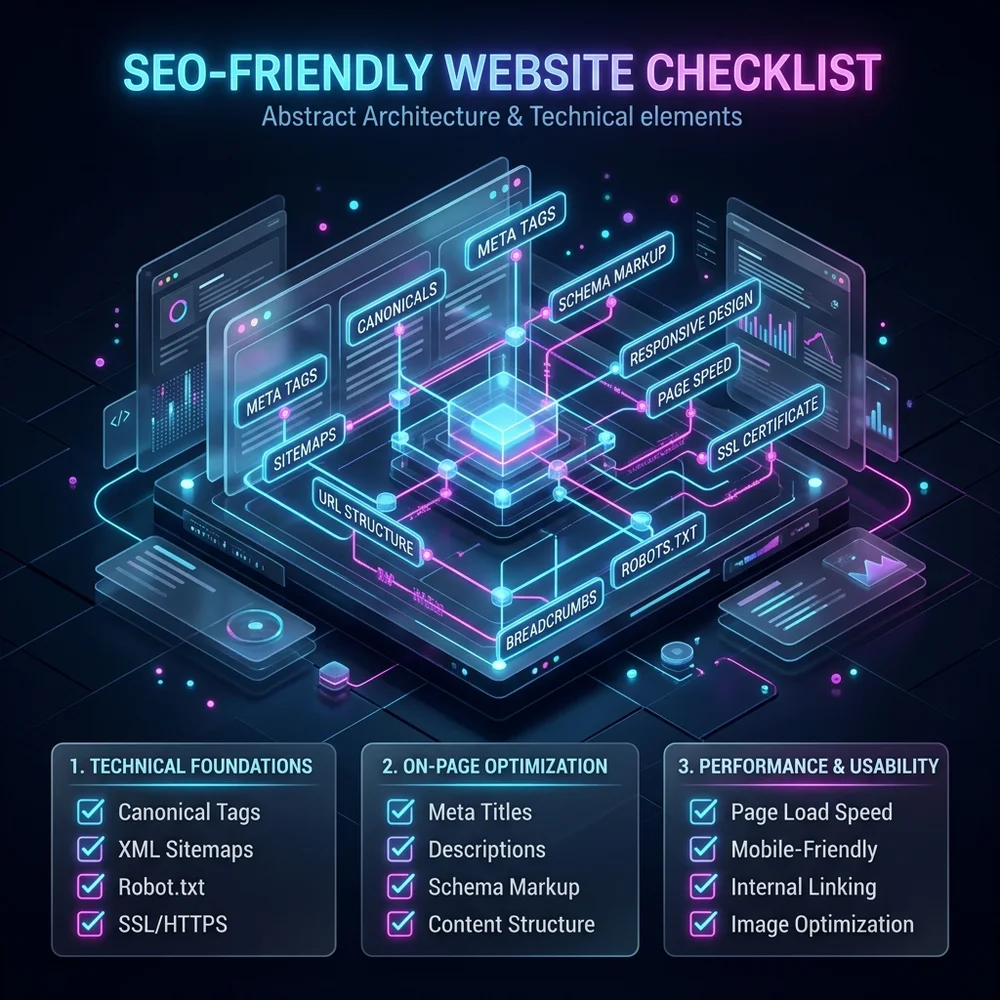
Why You Need an SEO-Friendly Website Design Checklist
Building a site without SEO is a major waste of time. Our seo-friendly website design checklist details the exact code configurations to check. By structuring your pages with clean semantic html5, you secure high Google indexing rates.
Optimizing why you need an seo-friendly website design checklist is vital for digital growth. Design teams should focus on tap target sizes and mobile-first layouts. This leads directly to higher conversion rates and customer trust. By removing visual clutter, you build long-term reader trust.
When applying a seo-friendly website design checklist strategy, evaluating options like heading tag hierarchy outline, image alt text tags, internal linking structure path, xml sitemap submission google helps outline the best approach. Our analysis shows that keeping a focus on clean semantic html5 and canonical URL tags parameters reduces structural friction and improves search engines index scores.
Key Optimization Tactic
Focus on user experience first. Conduct A/B split testing to optimize button labels and colors. Consequently, site conversion rates will compound and index scores will improve.
Heading Tag Hierarchy Outline and Content Structure
Every page needs a single H1 tag for the main title. Construct a heading tag hierarchy outline using H2s and H3s for sections. This helps search bots understand your content layout and semantic context. Partnering with an experienced agency like Webstacy ensures these technical standards are met.
Optimizing heading tag hierarchy outline and content structure is vital for digital growth. Analyzing the underlying user journey path is critical for this setup. This helps direct traffic toward your primary call-to-action. By removing visual clutter, you build long-term reader trust.
When applying a seo-friendly website design checklist strategy, evaluating options like heading tag hierarchy outline, image alt text tags, internal linking structure path, xml sitemap submission google helps outline the best approach. Our analysis shows that keeping a focus on robots txt configuration and mobile responsive grid parameters reduces structural friction and improves search engines index scores.
Key Optimization Tactic
Focus on user experience first. Review mobile layouts and check button tap targets on small screens. Consequently, site conversion rates will compound and index scores will improve.
→ Related: Complete Website Speed Optimization Checklist for 2026Optimizing Images with Alt Text Tags and Compression
Images must be optimized to load instantly. Write descriptive image alt text tags, resize visuals to display sizes, and convert to WebP. This reduces server bandwidth and speeds up page load times.
Optimizing optimizing images with alt text tags and compression is vital for digital growth. We recommend linking all forms directly to CRM autoresponder sequences. This helps direct traffic toward your primary call-to-action. By removing visual clutter, you build long-term reader trust.
When applying a seo-friendly website design checklist strategy, evaluating options like heading tag hierarchy outline, image alt text tags, internal linking structure path, xml sitemap submission google helps outline the best approach. Our analysis shows that keeping a focus on core web vitals audit and schema validation snippet parameters reduces structural friction and improves search engines index scores.
Key Optimization Tactic
Focus on user experience first. Conduct A/B split testing to optimize button labels and colors. Consequently, site conversion rates will compound and index scores will improve.
"Optimizing your core keyword layout parameters ensures search spider indexing matches user expectations. Value is created when looks and speed collaborate." — Webstacy Team
Building a Strong Internal Linking Structure Path
Link pages logically to guide crawlers. A robust internal linking structure path helps distribute page authority. Use descriptive anchor text rather than generic phrases like click here. Consult the team at Webstacy to review your digital performance and optimize your revenue metrics.
Optimizing building a strong internal linking structure path is vital for digital growth. Proper execution balances aesthetic appeal with page speed performance. This leads directly to higher conversion rates and customer trust. By removing visual clutter, you build long-term reader trust.
When applying a seo-friendly website design checklist strategy, evaluating options like heading tag hierarchy outline, image alt text tags, internal linking structure path, xml sitemap submission google helps outline the best approach. Our analysis shows that keeping a focus on website loading acceleration and obsolete javascript removal parameters reduces structural friction and improves search engines index scores.
Key Optimization Tactic
Focus on user experience first. Conduct A/B split testing to optimize button labels and colors. Consequently, site conversion rates will compound and index scores will improve.
→ Deep Dive: How to Increase Website Conversions with CROXML Sitemap Submission Google Search Console Steps
Help Google discover your pages. Set up canonical URL tags, configure your robots txt, and finalize your xml sitemap submission google search console integration to index pages cleanly.
Optimizing xml sitemap submission google search console steps is vital for digital growth. We recommend linking all forms directly to CRM autoresponder sequences. This ensures search spiders can crawl and index your keywords. By removing visual clutter, you build long-term reader trust.
When applying a seo-friendly website design checklist strategy, evaluating options like heading tag hierarchy outline, image alt text tags, internal linking structure path, xml sitemap submission google helps outline the best approach. Our analysis shows that keeping a focus on keyword text ratio and url slug structure parameters reduces structural friction and improves search engines index scores.
Key Optimization Tactic
Focus on user experience first. Include structured data schema markup to help Google display rich snippets. Consequently, site conversion rates will compound and index scores will improve.